How to Launch a Fully Booked After-School Padel Club with Zero School Admin
The Club Children Talk About: Why School Padel is the Ultimate After-School Activity
The best after-school clubs do not need much selling. Children talk about them. They tell their friends. They ask their parents if they can join. They come back the following term.
That is exactly the kind of environment we want to create with School Padel. Padel is new enough to feel exciting, simple enough for beginners to experience success quickly, and competitive enough that children want to keep playing.
And schools do not need a padel court to offer it.
Something Genuinely New
Most primary-aged children have played football. They have probably tried tennis, basketball, cricket, and athletics too.
Far fewer have picked up a padel racket. That gives an after-school padel club an immediate advantage: it feels new. Children are not being asked to join another version of something they have already done. They are discovering a sport that is exploding in popularity around the world for the first time.
That novelty might get them through the door, but the sessions need to make them want to come back.
Less Standing Around. More Playing.
Children have already spent a full day at school. The last thing we want is an after-school session where they spend ten minutes listening to a coach explain forehand technique and another ten waiting at the back of a queue.
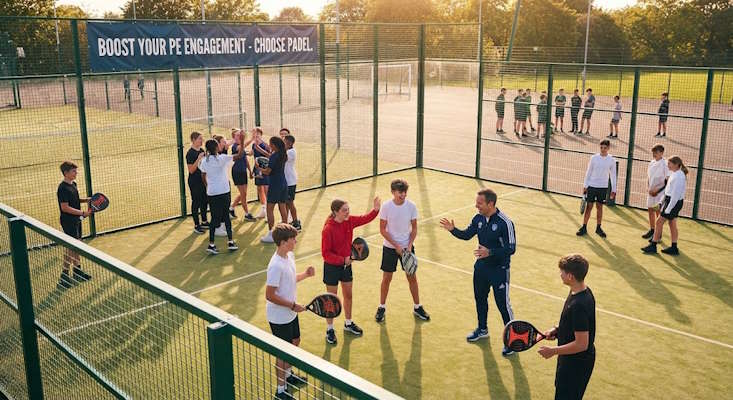
We want them playing. Our sessions are built around challenges, rallies, games, and competition:
- Can you beat your rally record?
- Can you hit through the gate?
- Can you lob your opponents and take the net?
- Can you win and move up a court?
Technical coaching is introduced as children need it, but the game remains at the heart of the session. Learn by playing. Improve by playing. And most importantly, enjoy playing.
Padel Gives Beginners a Chance
One reason padel has become so popular with adults is that you do not have to be an expert to enjoy it. We think that makes it particularly exciting for children.
School Padel adapts the equipment, playing areas, and challenges so children can experience success from the beginning. A rally of three becomes five. Five becomes ten. Then they are trying to beat the pair next to them.
Before long, they are serving, volleying, lobbing, defending, and beginning to understand how padel actually works. Progress is something they can feel, and when children feel themselves getting better at something, they usually want to do more of it.
Competition Without Elimination
We love competition. But we do not want children knocked out of a game and sitting at the side watching everyone else.
Instead, competition can be quick and continuous. Win a point and move up. Lose and try again. Beat your previous score. Challenge another pair. Earn an extra point for using the skill we have been learning.
Everyone stays involved. And because padel is normally played in pairs, children are learning to communicate, cooperate, and compete with a partner at the same time.
No Padel Court? No Problem.
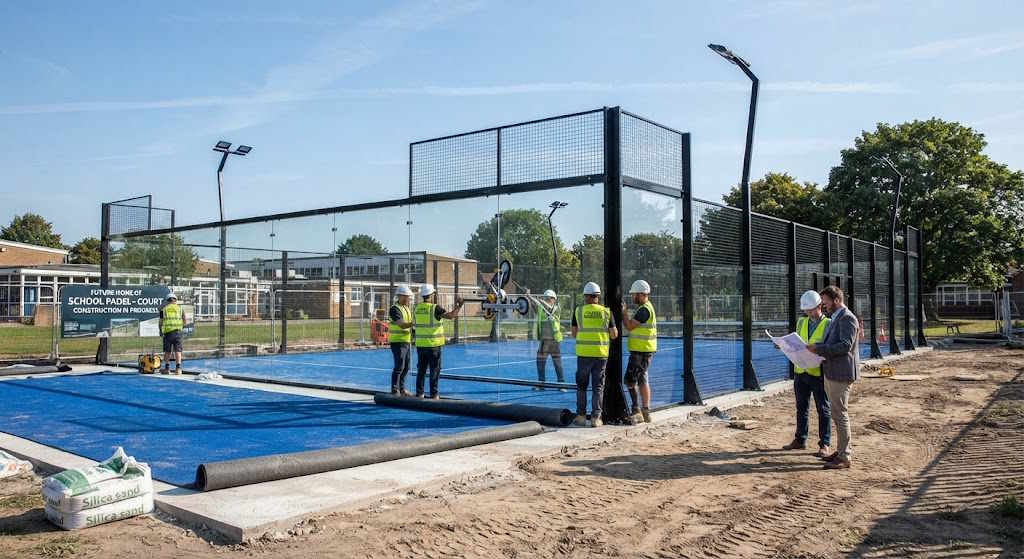
A permanent padel court is brilliant, but it is not necessary to start learning the sport.
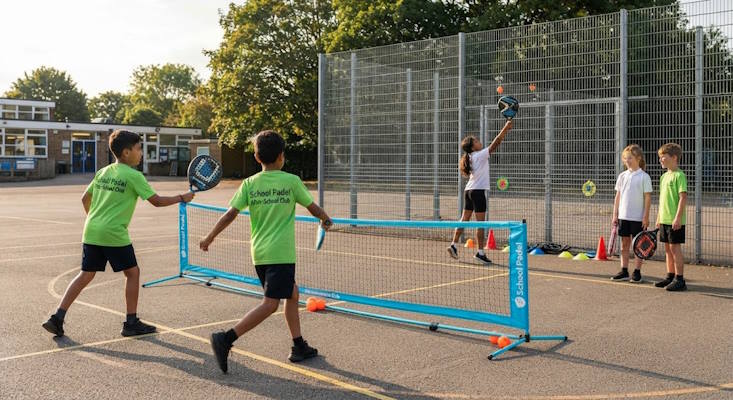
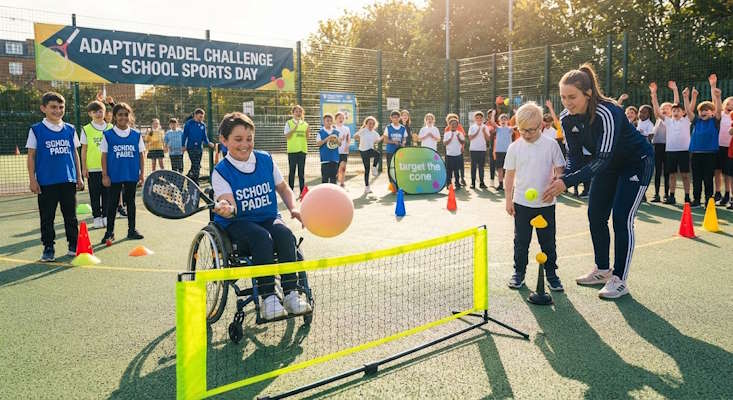
Using portable nets, adapted playing areas, rackets, and appropriate balls, School Padel can bring the fundamentals of the game into existing school spaces. Children can learn forehands, backhands, volleys, serves, lobs, movement, positioning, and teamwork. Where suitable walls are available, we can introduce rebounds too.
It means children can discover padel at their own school rather than needing to already belong to a club.
The Club Children Tell Their Friends About
Ultimately, the success of an after-school club is not determined by how good it looks on a timetable. It is whether children want to be there.
We want pupils leaving a School Padel session talking about the rally they won, the lob they finally landed, or the point where they beat their friend. Then they come back next week wanting another go.
And perhaps the best advertisement for the next School Padel club is not a poster or an email to parents. It is the children already playing it.
Share this
The Club Children Talk About: Why School Padel is the Ultimate After-School Activity
The best after-school clubs do not need much selling. Children talk about them. They tell their friends. They ask their parents if they can join. They come back the following term.
That is exactly the kind of environment we want to create with School Padel. Padel is new enough to feel exciting, simple enough for beginners to experience success quickly, and competitive enough that children want to keep playing.
And schools do not need a padel court to offer it.
Something Genuinely New
Most primary-aged children have played football. They have probably tried tennis, basketball, cricket, and athletics too.
Far fewer have picked up a padel racket. That gives an after-school padel club an immediate advantage: it feels new. Children are not being asked to join another version of something they have already done. They are discovering a sport that is exploding in popularity around the world for the first time.
That novelty might get them through the door, but the sessions need to make them want to come back.
Less Standing Around. More Playing.
Children have already spent a full day at school. The last thing we want is an after-school session where they spend ten minutes listening to a coach explain forehand technique and another ten waiting at the back of a queue.
We want them playing. Our sessions are built around challenges, rallies, games, and competition:
- Can you beat your rally record?
- Can you hit through the gate?
- Can you lob your opponents and take the net?
- Can you win and move up a court?
Technical coaching is introduced as children need it, but the game remains at the heart of the session. Learn by playing. Improve by playing. And most importantly, enjoy playing.
Padel Gives Beginners a Chance
One reason padel has become so popular with adults is that you do not have to be an expert to enjoy it. We think that makes it particularly exciting for children.
School Padel adapts the equipment, playing areas, and challenges so children can experience success from the beginning. A rally of three becomes five. Five becomes ten. Then they are trying to beat the pair next to them.
Before long, they are serving, volleying, lobbing, defending, and beginning to understand how padel actually works. Progress is something they can feel, and when children feel themselves getting better at something, they usually want to do more of it.
Competition Without Elimination
We love competition. But we do not want children knocked out of a game and sitting at the side watching everyone else.
Instead, competition can be quick and continuous. Win a point and move up. Lose and try again. Beat your previous score. Challenge another pair. Earn an extra point for using the skill we have been learning.
Everyone stays involved. And because padel is normally played in pairs, children are learning to communicate, cooperate, and compete with a partner at the same time.
No Padel Court? No Problem.
A permanent padel court is brilliant, but it is not necessary to start learning the sport.
Using portable nets, adapted playing areas, rackets, and appropriate balls, School Padel can bring the fundamentals of the game into existing school spaces. Children can learn forehands, backhands, volleys, serves, lobs, movement, positioning, and teamwork. Where suitable walls are available, we can introduce rebounds too.
It means children can discover padel at their own school rather than needing to already belong to a club.
The Club Children Tell Their Friends About
Ultimately, the success of an after-school club is not determined by how good it looks on a timetable. It is whether children want to be there.
We want pupils leaving a School Padel session talking about the rally they won, the lob they finally landed, or the point where they beat their friend. Then they come back next week wanting another go.
And perhaps the best advertisement for the next School Padel club is not a poster or an email to parents. It is the children already playing it.