Creating Watertight RAMS for School Padel: A Safety Guide for PE Heads
Introducing a new sport into school PE naturally raises questions about safety. Padel is highly adaptable and can be introduced in sports halls, playgrounds, MUGAs, tennis courts and purpose-built padel courts. Each environment presents slightly different considerations, so a good Risk Assessment and Method Statement, or RAMS, should reflect the pupils, equipment, playing surface, surrounding environment and way the session is organised.
Padel Is Inherently Well Suited to Safe School Delivery
No physical activity is risk free, but padel has several characteristics that make it particularly well suited to controlled school PE. The racket is compact, the playing areas are relatively small, ball speeds can be reduced for beginners, and activities can be organised within clearly defined or enclosed spaces. Compared with many field and invasion sports, pupils do not need to travel over large distances at speed and there is less reliance on physical contact between players. Equipment, court dimensions, ball type and activity intensity can also be adapted to suit age and ability. The enclosed nature of a regulation padel court can make group boundaries particularly clear. In adapted school delivery, temporary markings and carefully organised activity zones can provide similar clarity. The aim is not to remove every possible risk from sport. It is to identify foreseeable hazards and put sensible controls in place.
Start With the Playing Environment
Before a session begins, the playing area should be checked for anything that could create an unnecessary hazard. The surface should be suitable for the activity, reasonably even, free from significant contamination or debris and appropriate for the footwear being worn. Temporary nets, markers and other equipment should be positioned so that they do not create unnecessary trip hazards or obstruct circulation routes. Outdoor sessions also require consideration of weather conditions, including wet, icy or excessively slippery surfaces.
Choosing a Rebound Wall
One of the distinctive features of padel is learning to play after the ball rebounds from a wall. Schools do not necessarily need padel glass to introduce this skill, but not every wall is suitable. Any rebound wall should be inspected before use. Its surface should be sufficiently smooth and consistent for the intended activity, without dangerous projections, sharp edges, significant damage or other features that could present an unreasonable risk if a pupil came into contact with it. The area around the wall also matters. Pupils need appropriate space to learn rebound movement safely rather than simply being positioned close to any available wall.
Racket Tethers: Every Player, Every Time
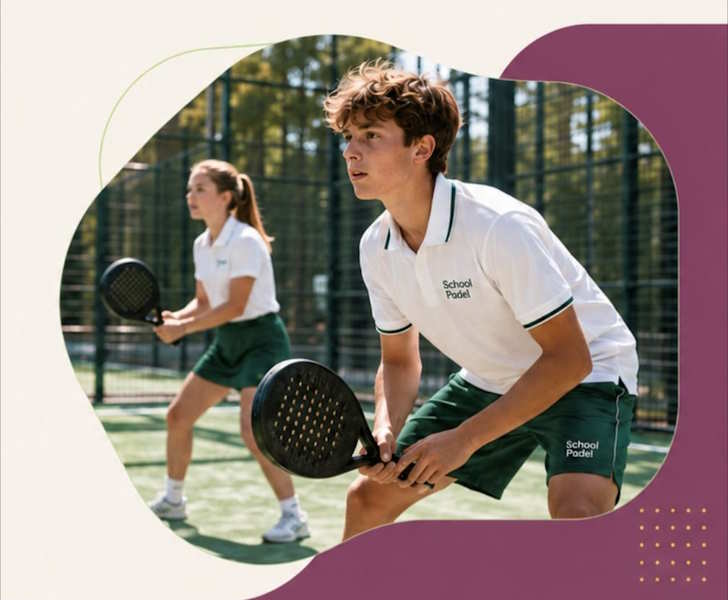
The wrist tether is an essential safety feature of a padel racket. Whether the player is a child, teacher, beginner or experienced adult, the tether should be correctly secured before play begins and remain attached while the racket is being used.
Racket on = tether on.
Rackets and tethers should be inspected regularly. A damaged or excessively worn tether should be taken out of service. School Padel rackets use replaceable tethers so that this important safety component can be replaced when necessary.
Teaching Children to Swing Safely
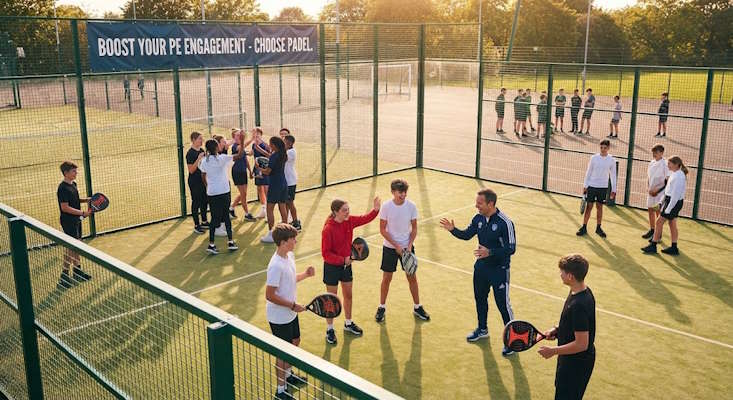
Safe racket use needs to be taught, not assumed. Children should learn to check the space around them before swinging and develop awareness of other pupils moving nearby. Activity areas should provide appropriate separation between players, particularly during exercises involving larger swings, volleys or overhead shots. Teachers should also consider where pupils waiting for their turn are positioned. Safe spacing and racket awareness should become habits from the first lesson.
Moving Backwards and Using Walls Safely
Padel introduces movement patterns that may be unfamiliar to pupils. One particularly important consideration is retreating towards a wall, fence or other boundary while following the ball. Children should be taught not to run backwards blindly. Movement and positioning should be introduced progressively so pupils develop awareness of the boundaries and learn appropriate footwork when moving away from the net. Rebound activities should initially be controlled and predictable before progressing to more dynamic situations.
Court Entry, Exit and Etiquette
Court etiquette is part of safe padel. Pupils should know where they are expected to enter and leave a playing area and should not simply walk across another group’s activity. On an enclosed court, gates and access points should remain clear. Players entering should wait until it is safe to do so, while pupils leaving should follow the agreed route rather than crossing through active play.
Never Chase a Ball Onto Another Court
Stray balls are inevitable in racket sports. Children should be specifically taught not to run onto another active court or through another group’s activity to retrieve a ball. If a ball enters another playing area, pupils should stop, communicate with the players or teacher responsible for that area and wait for the ball to be safely returned. A stray ball entering an active area can itself become a trip hazard, so pupils should also know how to alert others and stop play when necessary.
Equipment Checks
Rackets, balls, nets, posts, markers and rebound equipment should be appropriate for the activity and inspected as part of normal PE equipment management. If something breaks during a session, pupils should know to stop using it and tell the teacher. Damaged rackets, cracked components, compromised tethers, unstable nets or damaged temporary equipment should not remain in use simply to finish the lesson.
Ball Choice and Activity Intensity
Ball choice can form part of risk management, particularly with younger children and beginners. Different ball types and pressures alter the speed and behaviour of activities. School Padel can use age and activity-appropriate balls to slow exercises down, increase control and help pupils develop technique before progressing to faster and more demanding play. This can improve both safety and early success.
Managing a Class
Safe padel delivery is about organisation as much as equipment. A well-designed lesson considers how many pupils are active in each area, the direction in which balls are being hit, the distance between activities, where waiting pupils stand and how groups move between stations. School Padel’s adapted teaching methods are designed around the realities of school PE, including larger classes and spaces that were not originally designed for padel. More activity should not mean less control.
Emergency Procedures and Individual Needs
Normal school PE procedures still apply. Teachers should consider relevant pupil information, SEND requirements, appropriate supervision, first-aid arrangements and how emergency access will be maintained. Activities can then be adapted where an individual pupil requires additional support. A padel RAMS should complement the school’s existing PE safety arrangements rather than attempt to replace them.
RAMS Templates and Support for PE Departments
Schools should not have to start from a blank page when adding padel to their PE provision. As part of School Padel’s support, we can provide RAMS templates covering the principal considerations involved in school padel delivery. We can also work with PE departments to help adapt their existing RAMS and risk assessment systems to include padel as a new sport. The final assessment must always reflect the individual school’s site, pupils, activities and procedures, but our templates and practical guidance can make that process considerably more straightforward. This is particularly useful where padel is being delivered across different environments, such as a sports hall, playground, adapted rebound area or permanent court.
RAMS Should Be Specific to Your School
There isn’t one document that can make every padel session in every school automatically safe. A sports hall presents different considerations from a playground. An adapted rebound wall differs from regulation padel glass. A Year 3 introductory lesson is different from an experienced secondary-school after-school club. Good RAMS should reflect those differences. School Padel can support schools in identifying the hazards and control measures relevant to the type of padel provision being delivered.
Safe Habits From the First Lesson
Some of the most effective control measures eventually become behaviours: check your space, secure your tether, control your racket, know what is behind you, don’t chase stray balls, enter and leave safely, and stop if equipment is damaged. Teach those habits from the beginning and pupils don’t just learn how to play padel. They learn how to play padel responsibly.
Safe equipment. Safe spaces. Safe habits. Confident participation.
Share this
Introducing a new sport into school PE naturally raises questions about safety. Padel is highly adaptable and can be introduced in sports halls, playgrounds, MUGAs, tennis courts and purpose-built padel courts. Each environment presents slightly different considerations, so a good Risk Assessment and Method Statement, or RAMS, should reflect the pupils, equipment, playing surface, surrounding environment and way the session is organised.
Padel Is Inherently Well Suited to Safe School Delivery
No physical activity is risk free, but padel has several characteristics that make it particularly well suited to controlled school PE. The racket is compact, the playing areas are relatively small, ball speeds can be reduced for beginners, and activities can be organised within clearly defined or enclosed spaces. Compared with many field and invasion sports, pupils do not need to travel over large distances at speed and there is less reliance on physical contact between players. Equipment, court dimensions, ball type and activity intensity can also be adapted to suit age and ability. The enclosed nature of a regulation padel court can make group boundaries particularly clear. In adapted school delivery, temporary markings and carefully organised activity zones can provide similar clarity. The aim is not to remove every possible risk from sport. It is to identify foreseeable hazards and put sensible controls in place.
Start With the Playing Environment
Before a session begins, the playing area should be checked for anything that could create an unnecessary hazard. The surface should be suitable for the activity, reasonably even, free from significant contamination or debris and appropriate for the footwear being worn. Temporary nets, markers and other equipment should be positioned so that they do not create unnecessary trip hazards or obstruct circulation routes. Outdoor sessions also require consideration of weather conditions, including wet, icy or excessively slippery surfaces.
Choosing a Rebound Wall
One of the distinctive features of padel is learning to play after the ball rebounds from a wall. Schools do not necessarily need padel glass to introduce this skill, but not every wall is suitable. Any rebound wall should be inspected before use. Its surface should be sufficiently smooth and consistent for the intended activity, without dangerous projections, sharp edges, significant damage or other features that could present an unreasonable risk if a pupil came into contact with it. The area around the wall also matters. Pupils need appropriate space to learn rebound movement safely rather than simply being positioned close to any available wall.
Racket Tethers: Every Player, Every Time
The wrist tether is an essential safety feature of a padel racket. Whether the player is a child, teacher, beginner or experienced adult, the tether should be correctly secured before play begins and remain attached while the racket is being used.
Racket on = tether on.
Rackets and tethers should be inspected regularly. A damaged or excessively worn tether should be taken out of service. School Padel rackets use replaceable tethers so that this important safety component can be replaced when necessary.
Teaching Children to Swing Safely
Safe racket use needs to be taught, not assumed. Children should learn to check the space around them before swinging and develop awareness of other pupils moving nearby. Activity areas should provide appropriate separation between players, particularly during exercises involving larger swings, volleys or overhead shots. Teachers should also consider where pupils waiting for their turn are positioned. Safe spacing and racket awareness should become habits from the first lesson.
Moving Backwards and Using Walls Safely
Padel introduces movement patterns that may be unfamiliar to pupils. One particularly important consideration is retreating towards a wall, fence or other boundary while following the ball. Children should be taught not to run backwards blindly. Movement and positioning should be introduced progressively so pupils develop awareness of the boundaries and learn appropriate footwork when moving away from the net. Rebound activities should initially be controlled and predictable before progressing to more dynamic situations.
Court Entry, Exit and Etiquette
Court etiquette is part of safe padel. Pupils should know where they are expected to enter and leave a playing area and should not simply walk across another group’s activity. On an enclosed court, gates and access points should remain clear. Players entering should wait until it is safe to do so, while pupils leaving should follow the agreed route rather than crossing through active play.
Never Chase a Ball Onto Another Court
Stray balls are inevitable in racket sports. Children should be specifically taught not to run onto another active court or through another group’s activity to retrieve a ball. If a ball enters another playing area, pupils should stop, communicate with the players or teacher responsible for that area and wait for the ball to be safely returned. A stray ball entering an active area can itself become a trip hazard, so pupils should also know how to alert others and stop play when necessary.
Equipment Checks
Rackets, balls, nets, posts, markers and rebound equipment should be appropriate for the activity and inspected as part of normal PE equipment management. If something breaks during a session, pupils should know to stop using it and tell the teacher. Damaged rackets, cracked components, compromised tethers, unstable nets or damaged temporary equipment should not remain in use simply to finish the lesson.
Ball Choice and Activity Intensity
Ball choice can form part of risk management, particularly with younger children and beginners. Different ball types and pressures alter the speed and behaviour of activities. School Padel can use age and activity-appropriate balls to slow exercises down, increase control and help pupils develop technique before progressing to faster and more demanding play. This can improve both safety and early success.
Managing a Class
Safe padel delivery is about organisation as much as equipment. A well-designed lesson considers how many pupils are active in each area, the direction in which balls are being hit, the distance between activities, where waiting pupils stand and how groups move between stations. School Padel’s adapted teaching methods are designed around the realities of school PE, including larger classes and spaces that were not originally designed for padel. More activity should not mean less control.
Emergency Procedures and Individual Needs
Normal school PE procedures still apply. Teachers should consider relevant pupil information, SEND requirements, appropriate supervision, first-aid arrangements and how emergency access will be maintained. Activities can then be adapted where an individual pupil requires additional support. A padel RAMS should complement the school’s existing PE safety arrangements rather than attempt to replace them.
RAMS Templates and Support for PE Departments
Schools should not have to start from a blank page when adding padel to their PE provision. As part of School Padel’s support, we can provide RAMS templates covering the principal considerations involved in school padel delivery. We can also work with PE departments to help adapt their existing RAMS and risk assessment systems to include padel as a new sport. The final assessment must always reflect the individual school’s site, pupils, activities and procedures, but our templates and practical guidance can make that process considerably more straightforward. This is particularly useful where padel is being delivered across different environments, such as a sports hall, playground, adapted rebound area or permanent court.
RAMS Should Be Specific to Your School
There isn’t one document that can make every padel session in every school automatically safe. A sports hall presents different considerations from a playground. An adapted rebound wall differs from regulation padel glass. A Year 3 introductory lesson is different from an experienced secondary-school after-school club. Good RAMS should reflect those differences. School Padel can support schools in identifying the hazards and control measures relevant to the type of padel provision being delivered.
Safe Habits From the First Lesson
Some of the most effective control measures eventually become behaviours: check your space, secure your tether, control your racket, know what is behind you, don’t chase stray balls, enter and leave safely, and stop if equipment is damaged. Teach those habits from the beginning and pupils don’t just learn how to play padel. They learn how to play padel responsibly.
Safe equipment. Safe spaces. Safe habits. Confident participation.